Calendula and Acacia Flower Patterns: A Versatile Design Resource for Commercial and Creative Projects
Calendula and Acacia Flower Patterns offer a unique blend of natural beauty and artistic versatility, making them a popular choice among designers, artists, and entrepreneurs. These patterns are crafted with attention to detail, combining the vibrant hues of calendula flowers with the delicate structure of acacia blossoms. Whether you're looking to create custom packaging, digital art, or textile designs, this collection provides high-quality, ready-to-use visuals that can be seamlessly integrated into various projects.
Understanding Calendula and Acacia Flower Patterns
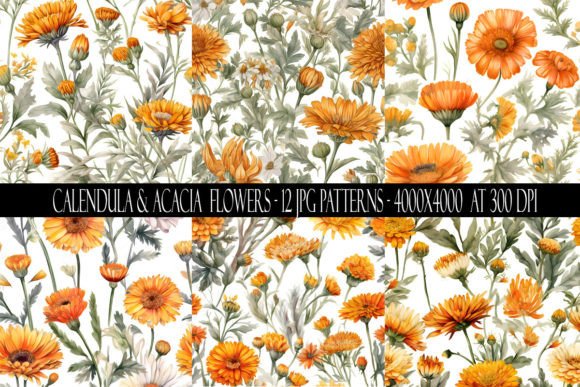
Calendula, commonly known as marigold, is recognized for its bright orange and yellow petals, while acacia flowers feature a more subtle, clustered appearance with small, pale-yellow blooms. Together, these two floral elements form a pattern that balances boldness with elegance. The combination is not only visually appealing but also rich in symbolism, often associated with healing, positivity, and growth.
This particular collection includes 12 seamless patterns in JPG format, each measuring 4000 x 4000 pixels at 300 dpi resolution. The high-resolution images ensure crisp clarity when printed or used digitally, making them ideal for both large-scale and detailed applications. The zip file format makes it easy to download and organize the assets, streamlining the creative workflow.
Key Features and Benefits
The commercial use and print-on-demand licensing make this collection particularly valuable for businesses and freelancers who need scalable design resources. Here are some of the standout features:
- High Resolution: At 300 dpi, these patterns maintain quality even when scaled up for print, ensuring professional results.
- Seamless Format: Each pattern is designed to repeat without visible seams, which is essential for fabric, wallpaper, and other continuous surface applications.
- Commercial Use: The licensing allows for use in products such as clothing, home décor, stationery, and more, providing flexibility for creative professionals.
- Diverse Applications: From digital illustrations to physical prints, these patterns can be adapted to a wide range of mediums and industries.
Comparing Calendula and Acacia Flower Patterns with Other Floral Designs
While many floral patterns exist in the market, what sets Calendula and Acacia Flower Patterns apart is their specific combination of two distinct botanical elements. Compared to single-flower patterns like roses or daisies, this dual-floral approach offers more visual interest and complexity. It also stands out from more abstract or geometric designs by maintaining a strong connection to nature.
For instance, compared to traditional botanical illustrations, these patterns are optimized for seamless repetition rather than detailed botanical accuracy. This makes them more suitable for background textures and less appropriate for scientific or educational purposes. However, they excel where visual appeal and usability are prioritized over precise representation.
In comparison to modern minimalist patterns, Calendula and Acacia Flower Patterns provide a richer, more organic feel. They may not be the best fit for those seeking ultra-simplified aesthetics, but they are an excellent choice for anyone looking to add warmth and natural charm to their designs.
When to Choose Calendula and Acacia Flower Patterns
These patterns are well-suited for a variety of creative scenarios. If you're designing for a wellness brand, a garden-themed product line, or a nature-inspired interior space, this collection could be an ideal match. Their warm color palette and soft, flowing lines complement a wide range of color schemes and styles.
Additionally, the commercial use license makes them a practical option for entrepreneurs and independent creators who need to produce items on demand. Whether you're creating custom T-shirts, greeting cards, or home textiles, the versatility of these patterns ensures they can be adapted to different formats and materials.
However, there are situations where alternative options might be more appropriate. For example, if your project requires a very specific historical or cultural motif, or if you need extremely detailed botanical drawings, this collection may not meet those needs. In such cases, exploring specialized botanical illustration resources would be a better course of action.
Evaluating Tradeoffs and Limitations
While Calendula and Acacia Flower Patterns offer numerous advantages, it's important to consider potential tradeoffs. One limitation is the fixed design set—there are no customizable options or variations included in the package. Users who require highly tailored or modified patterns may need to invest additional time or resources in editing the files themselves.
Another consideration is the format. While JPG is widely supported, it is a raster image format, which means it cannot be easily scaled beyond its original resolution without losing quality. For users who need vector-based graphics for intricate scaling or modification, SVG or AI formats may be preferable, though they are not available in this collection.
Despite these limitations, the benefits of using this collection often outweigh the drawbacks for most users. The ease of use, high resolution, and commercial licensing make it a reliable resource for many creative and business-related applications.
Real-World Examples and Use Cases
Imagine you're launching a new line of eco-friendly skincare products. The natural, calming aesthetic of Calendula and Acacia Flower Patterns could align perfectly with your brand's values. You could use these patterns for product labels, packaging, and promotional materials, reinforcing the connection between your brand and nature.
Alternatively, suppose you're a freelance designer working on a client's website redesign. Incorporating these patterns as background textures or decorative elements could add a touch of organic elegance without overwhelming the overall design. Their seamless nature ensures they work well in both static and animated web elements.
For print-on-demand businesses, these patterns can be applied to a wide range of products, from mugs and phone cases to tote bags and wall art. The ability to license them for commercial use eliminates the need for additional royalty payments or sourcing rights, saving both time and money.
However, if your project involves creating a complex, layered design that requires multiple overlapping textures or gradients, you may find that these patterns alone do not provide enough depth or variation. In such cases, layering them with other textures or using them as a base for further customization could be necessary.
Conclusion
Calendula and Acacia Flower Patterns represent a thoughtful and versatile design solution for those seeking to incorporate natural elements into their creative or commercial projects. With their high-resolution format, seamless design, and commercial licensing, they offer a compelling option for designers, entrepreneurs, and hobbyists alike. While they may not be the best fit for every scenario, their adaptability and aesthetic appeal make them a valuable addition to any design toolkit.